

Reflections from the road: GreenBiz 25 Day 2


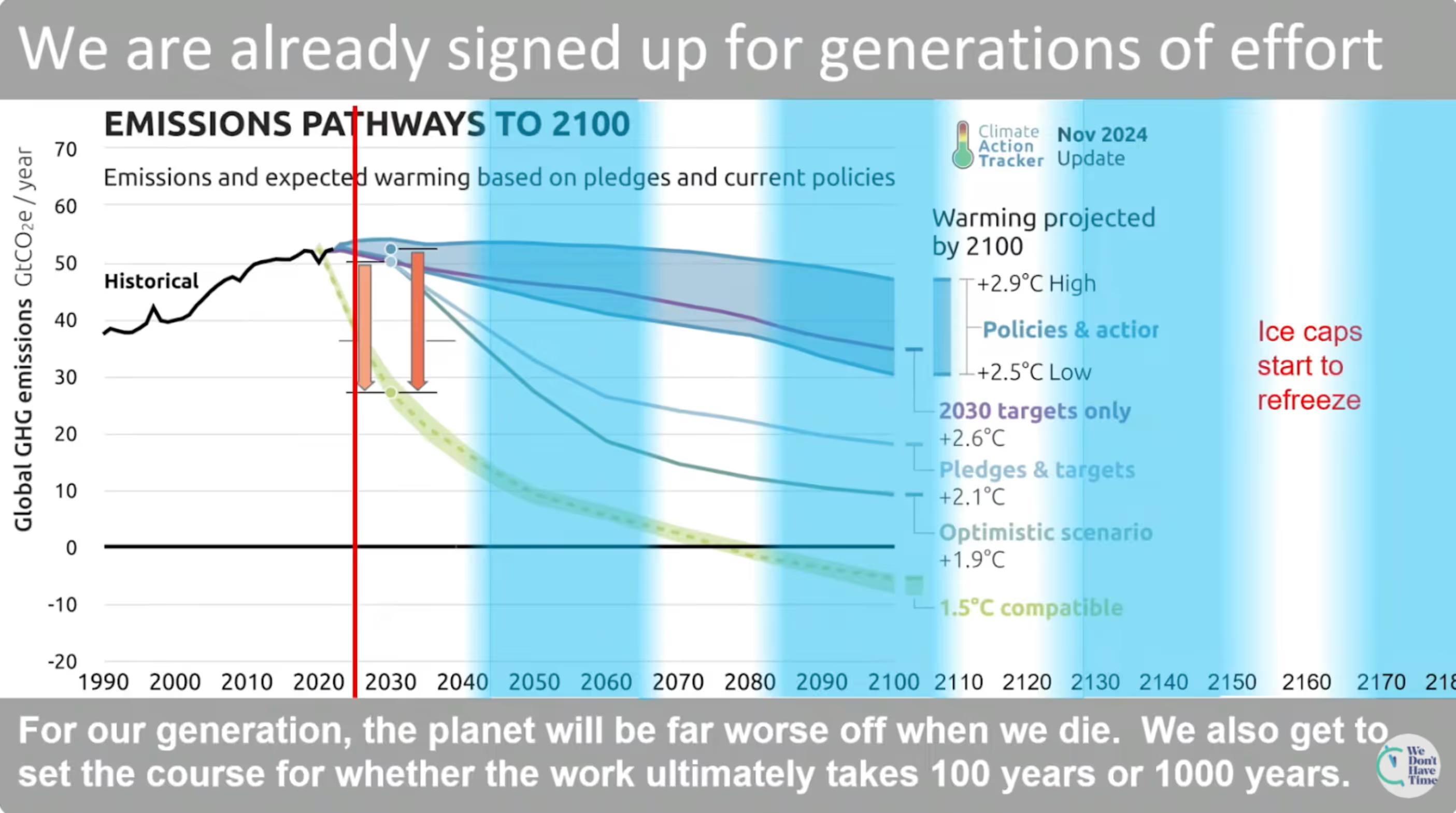
After an exciting first day, Day 2 brought a heightened sense of urgency, and the understanding that we live in the time of ‘The Big Loss Decades.’ From biodiversity collapse to the role of local leadership in climate action, the message was clear: We must think beyond short-term wins and start designing solutions beyond our current generation. These are just a few reflections from GreenBiz that highlight the importance of sustainable action.
1. The climate clock is ticking, and we’re in overtime
One of the key takeaways was encapsulated by this quote from Tom Chi, Founding Partner, At One Ventures:
“We are in the years where the largest proportions of nature that we’re going to lose will be lost. These are the decades where it happens. The Big Loss Decades.”
The climate crisis is no longer a future problem, it is here, now. Chi’s message was blunt: If we don’t act decisively now, we won’t have anything left to save. Yet, there was also a message of resilience:
“There are very important things to do this decade, next decade, and the decade after that. But we also need to start thinking about solutions that will span 150-200 years.”
2. Local action can have global impact
With national policies often stalling, cities and states are stepping up. Phoenix is proving to be a model for sustainable urban development, with bold investments in water conservation, circular economy initiatives, and heat mitigation strategies. Kate Gallego, Mayor of Phoenix, shared:
“No one ever tells the mayor they want more landfills. That’s why we’re betting big on circular economy solutions, partnering with ASU to build an entire campus dedicated to sustainability.”
Similarly, states like Illinois, New Mexico, and Michigan are pushing forward with progressive climate policies, proving that action at the local level can drive nationwide change.

3. The case for sustainability is stronger than ever
Companies that integrate sustainability as a core business function, not just an ESG checkbox, will gain a competitive advantage in the years ahead. As Caitlin Leibert, VP of Sustainability, Whole Foods shared:
“Sustainability isn’t a side initiative anymore, it’s central to business strategy. If you want to make progress at scale, you actually have to place your bets and go full steam ahead.”

4. It’s about redirecting energy toward collaboration
In a world increasingly divided on climate and sustainability issues, learning how to navigate conflict is critical. Shamal Idris, CEO, Search for Common Ground noted:
“The most effective teams are the most diverse teams. But without trust, diverse teams can also be the least effective. The key difference? Building trust.”
Using Aikido as a metaphor, Idris explained that productive conflict resolution isn’t about attacking or retreating, it’s about redirecting energy toward collaboration. Companies that master this approach will be better positioned to drive meaningful sustainability progress in today’s polarized landscape.
At GreenBiz 25, Shamal Idris, introduced a powerful framework for managing conflict: Aikido Politics. Drawing from the martial art of Aikido, this approach emphasizes redirecting aggression rather than directly confronting it.
“The goal is to get both you and your aggressor to a safe space.”
Unlike traditional responses to conflict, such as fight or flight, Aikido teaches us to absorb and redirect energy, transforming opposition into productive collaboration.
Final thoughts
A quote that deeply resonated with me, and which I’d carry forward:
“Are you ready to push your company beyond incremental change? Are you ready to ask hard questions and demand better? The time is now.”
Latest Posts
InPlanet and Idemitsu Americas Holdings Close Non-Recourse Debt Facility, Setting a New Standard for Financing ERW Carbon Removal
The transaction secures capital against contracted, insured delivery of durable removals, proof that high-integrity projects can now access scalable debt beyond equity.

InPlanet selected as the Brazilian supplier in Whirlpool Corporation's durable carbon removal portfolio
Structured by ClimeFi, the agreement pairs a firm 2030 delivery with standalone options, expanding Enhanced Rock Weathering across Brazil's agricultural heartland.

Agronomic Benefits of Basalt Rock Powder on Sugarcane: Insights from Project Serra da Mantiqueira
Field results from Project Serra da Mantiqueira show how Enhanced Rock Weathering can improve soil health while enabling durable carbon removal.

From Field to Credits: Inside the World's First Second-Year Enhanced Rock Weathering Credit Issuance
A recap of our webinar exploring MRV for enhanced rock weathering, and what two years of data from Serra da Mantiqueira tell us about the accuracy, durability, and scalability of ERW as a carbon removal pathway.